Engineering Authentic Virality for Fun and Profit
Looking for a formula for generating viral content like the Big Arch? You’ll find it here! Also, you already failed!
Can you engineer virality? Those crossover moments where the commercial gets real cultural attention for free? The kind of thing P.T. Barnum famously spent his life pursuing?
The sauce long-ago settled on McDonald’s CEO Chris Kempczinski’s lunch. The question lingers: how did he garner the kind of attention Barnum would’ve loved, in such an un-Barnum-like way?
Barnum was the kind of guy who charged people to see a "Fiji Mermaid" that was literally a monkey sewn to a fish tail. All Kempczinski had to do was post a clip taking a bite of the new Big Arch burger and the internet lost its shit. His mannerisms looked less like snacking and more like defusing a bomb.
He’s in a sterile office, V-neck sweater, clutching a 1,020-calorie double-patty with the tentative optimism of someone handling a biological sample. He refers to it repeatedly as the product. He takes a bite so tiny it seems accusatory. He promises he'll "enjoy the rest of lunch" off-screen. We doubt this.
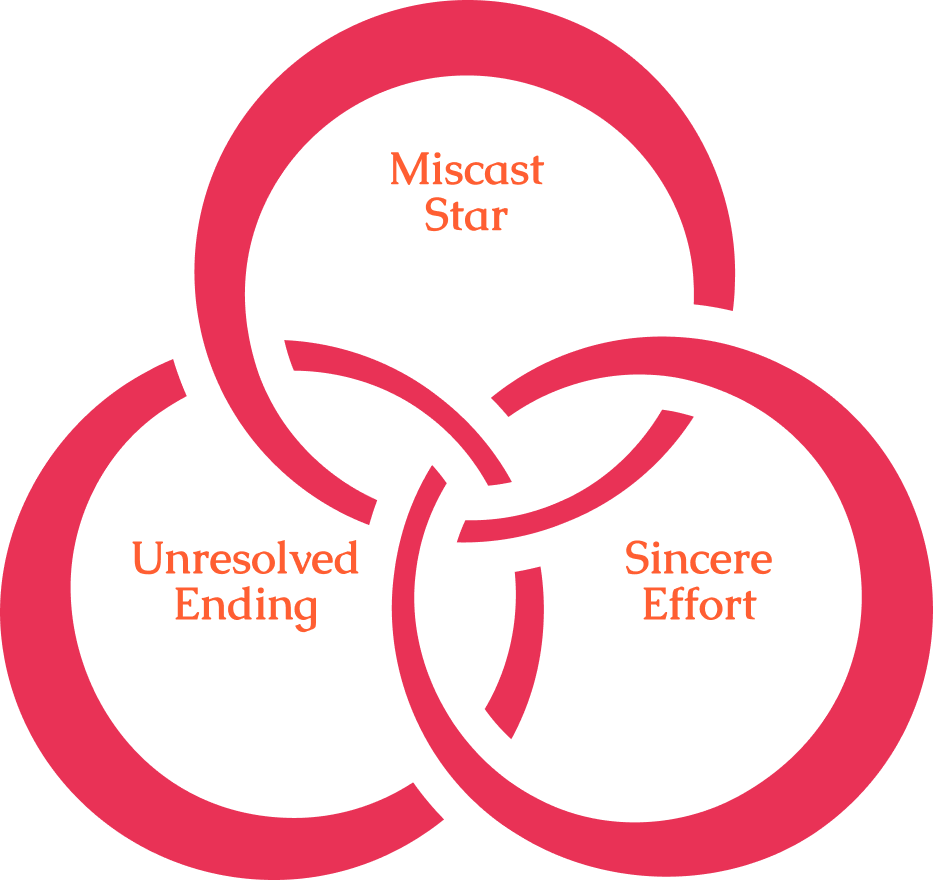
Could it have been staged? The truth is, applying a Barnum-like 3-ring circus approach gives us a surprisingly repeatable Internet-era attention-getting formula:
Ring One: The Miscast Star. The first source of tension is that Kempczinski offers a gap between who he visibly is and what he's being asked to sell. The wrong person in the spotlight. The audience can't look away from incongruity. Barnum knew this. It's why he put a 500-pound man next to a 40-pound man and called it a show. People love a fish outta water.
Ring Two: Sincere Effort. Here's the critical part that most people miss: he's not winking. He's not in on the joke. He is genuinely trying to eat this burger in a professional manner and explain its qualities to camera. That sincerity is the engine. If he'd been ironic "look, I know what this looks like" the whole thing deflates. The internet feasts on earnest, slightly painful effort.
Ring Three: The Unresolved Ending. He doesn't finish the burger. He promises to eat the rest "later." The loop never closes. Open loops are psychologically maddening. We're compelled to fill them, discuss them, share them. Every great piece of viral content leaves something hanging. Every meme is a question looking for an answer. He handed the internet an incomplete sentence and they've been finishing it ever since.
Put the three rings together and you get Barnum's formula, updated for the attention economy:
Miscast + Sincere + Unresolved = Irresistible
This formula draws a surprisingly effective throughline from the early days of the Internet's "Charlie Bit My Finger" genre (rife with dancing babies as performers), to William Hung's American Idol audition (2004), to the Coldplay Kiss Cam of 2025.
Kempczinski’s clip exploded after creators on X and TikTok picked it up and began mocking his stiffness and corporate presentation. The twist Barnum would have loved is when McDonald's told the Wall Street Journal that early Big Arch sales were beating expectations. Thanks to one awkward nibble, everyone knew it existed. And true to formula, with Kempczinski the memes, mockery, and mimicry ensued:
Irish comedian Garron Noone roasted the video on TikTok on February 25th, garnering millions of views.
A parody of a comedian playing Kempczinski as C-3PO pulled over 20+ million views.
Competitors piled on cheesily: Burger King's president posted himself taking a Whopper bite, sauce on his face, quipping "Only one thing missing: a napkin." Wendy's US president then ate nearly half a burger and dipped a fry in a Frosty.
Hot takes called it a PR disaster. Was it? With time and distance, we began to wonder.
Was this all a Barnum-worthy engineered stunt? Probably not. It's a launch moment that sounds like an earnings call. It felt real. He's a likable guy doing something authentically inauthentic. A "fish out of water" moment. Kempczinski is a marathon runner who heads a $230 billion company. He's probably not scarfing McArch's for lunch on the daily. And that's okay. He's trying to be approachable. He probably is, in his way. And in another way, not so much.
But the internet clocked the disconnect instantly and rewarded it with the only currency that matters right now: attention.
That's the brutal math of the modern attention economy. Scale has never been harder to achieve and easier to lose. A brand like McDonald's has to feed roughly 40,000 locations worldwide, and serve nearly 70 million customers a day by maintaining genuine mass awareness across that footprint. It requires something close to a miracle every news cycle. You can spend hundreds of millions on campaigns that generate a polite shrug. Or a CEO can take a suspiciously tiny nibble of a sandwich and hand the internet a meme that does the work for free.
Easy!
Except it’s not. If it was, the cheesy imitators would’ve scored. Because the real lesson is this: in an attention economy, being interesting beats being polished almost every time. And being a genuine personal brand is increasingly beating being a brand.
Barnum understood this intuitively. He didn't have a brand strategy; he had a spectacle. The spectacle was the point.
For brands operating at scale with mass audiences, the calculus increasingly comes down to needing people talking. Any people. The alternative is careful, corporate, inoffensive content that nobody shares, nobody mocks, and nobody remembers. That is far more dangerous than one executive eating a burger like it's evidence in a trial.
The clincher is, P.T. Barnum may never have said there's no such thing as bad publicity. At least, nobody can prove he did. But whoever said it first was onto something.
Of course, the very idea of formulas begins to stretch at the point of being interesting, authentic, inspired.
It's probably more true to say you gotta just try stuff, be spontaneous, get real people involved who don't mind having fun and looking a little foolish at times. Like ol' Chris.